Rare Hematology News
Advertisement
Spotlight On
Glanzmann thrombasthenia
Glanzmann thrombasthenia (GT) is a rare inherited blood clotting disorder that is present at birth. It is characterized by the impaired function of specialized blood cells, called platelets, that are essential for proper blood clotting
Prevalence
1 / 1 000 000
200–500
US Estimated
300–800
Europe Estimated
Age of Onset
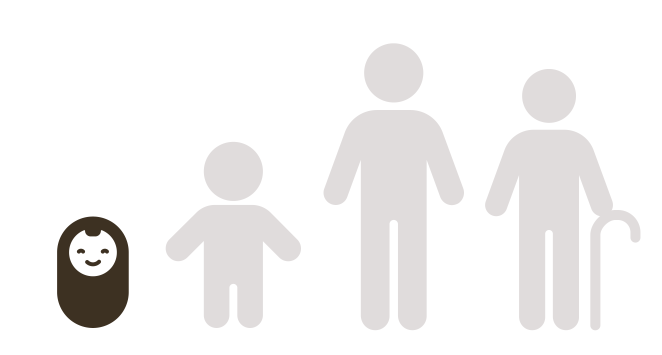
Infancy

ICD-10
D69.1
Inheritance
Autosomal dominant

Autosomal recessive
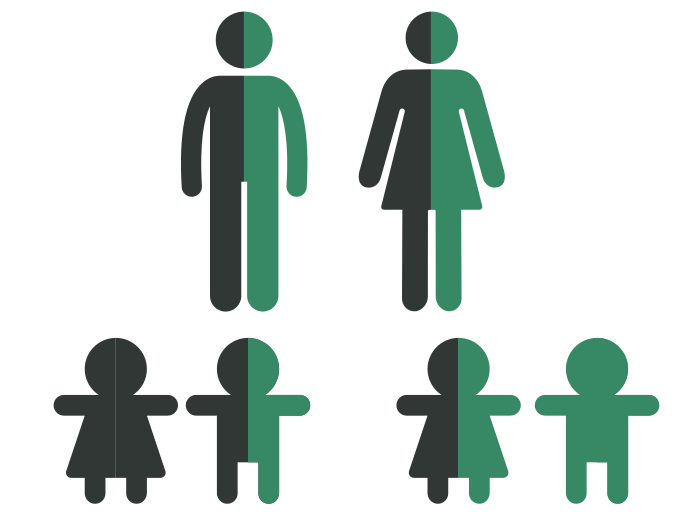
Mitochondrial/Multigenic
X-linked dominant
X-linked recessive
5 Facts you should know
FACT
GT is an autosomal recessive bleeding disorder caused by mutations in ITGA2B or ITGB3, resulting in defective or absent platelet integrin αIIbβ3 (glycoprotein IIb/IIIa), crucial for platelet aggregation
FACT
Affected individuals present with mucocutaneous bleeding, including epistaxis, gingival bleeding, easy bruising, and menorrhagia; spontaneous bleeding may be severe in homozygous or compound heterozygous cases
FACT
Platelet count and morphology are normal, but platelet aggregation studies show absent response to all agonists except ristocetin, aiding in diagnosis
FACT
Recombinant activated factor VII (rFVIIa) is commonly used to manage bleeding episodes, especially in patients who have developed antibodies or are refractory to platelet transfusions
FACT
Definitive treatment may include hematopoietic stem cell transplantation (HSCT) in severe, transfusion-dependent cases, though this approach is rare and reserved for select patients
Interest over time
Google searches
Common signs & symptoms
Easy bruising
Frequent nosebleeds
Gingival bleeding
Spontaneous hematomas
Menorrhagia
in females
Prolonged bleeding after cuts or surgery
No clot retraction
on platelet function testing
Current treatments
Platelet transfusions
during severe bleeding or surgery
Antifibrinolytic agents
Recombinant activated factor VII (rFVIIa)
in patients with anti-platelet antibodies
Bone marrow transplant
rare, but curative in some severe cases